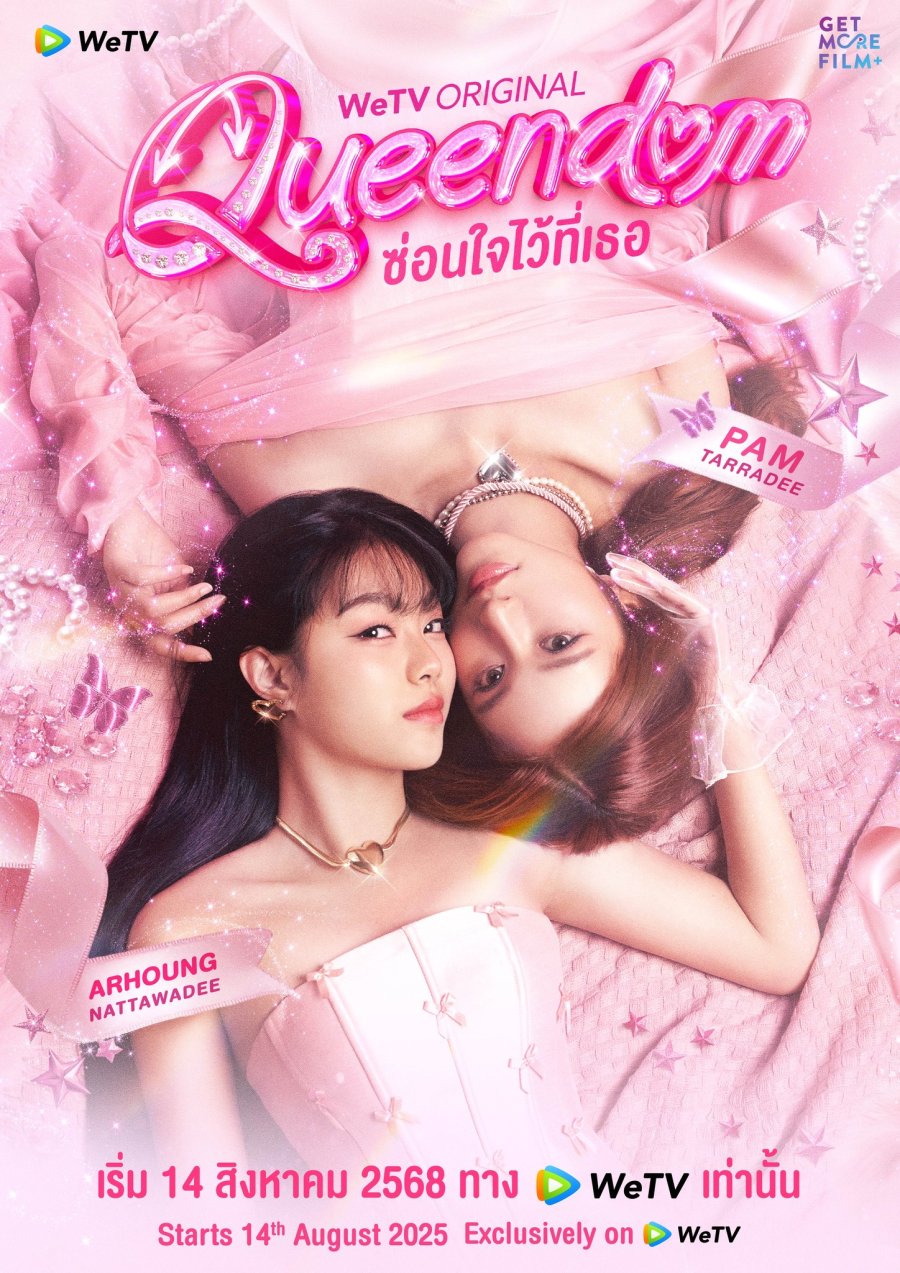
Queendom ซ่อนใจไว้ที่เธอ
- 2025
คะแนนแยกตามหมวดหมู่
บทนำ
Queendom does not wallow in the clichéd tropes of soul swap narratives; instead, it transforms the premise into a catalyst for the characters’ perspective-taking and growth. The two young leads endow their roles with vivid vitality through their highly contrasting performances, while the sub-couple’s storyline adds rich emotional layers to the series. The director’s shot composition and attention to detail maximize the actors’ charm to the fullest, making it a Thai GL drama well worth savoring.
การวิเคราะห์
I. Plot: Innovative Deconstruction of a Classic Trope 1. Core Framework Rey and Print, bitter rivals entrenched in the entertainment industry, are forced to step into each other’s lives following a soul swap, evolving from sworn enemies to lovers amid a whirlwind of chaos. Transcending the formulaic confines of the "soul swap" narrative device, the series reimagines this setup as a powerful tool for "forced perspective-taking". As the protagonists navigate and resolve one another’s predicaments, they embark on a profound journey of self-growth—Rey learns to shed her haughty demeanor, while Print uncovers a latent flair for acting. 2. Emotional Logic The romantic trajectory eschews the rushed clichés of superficial romance, instead anchoring its conflicts in the "dissonance between soul and body". Their affection is rooted in a deep connection to each other’s souls, yet physical intimacy—whether with their own or their counterpart’s body—sparks intense psychological discomfort. It is only by "affirming the primacy of the soul" that they dismantle this barrier, imbuing the evolution of their intimate bond with remarkable depth and complexity. 3. Subplots and Themes Subplots, including Print’s fraught relationship with her family and the cutthroat dynamics of the entertainment business, add rich layers to the narrative fabric. Through the protagonists’ transformative arcs, the series delves into profound explorations of "self-discovery" and "the true essence of love", infusing its lighthearted romantic comedy veneer with resonant emotional depth. II. Performance: Nuanced Portrayal of the Body-Swap Dynamic 1. Contrasting Dual Roles by the Leads Rey (essayed by Natta Wadee) and Print (brought to life by Tarra Dee) demand the actors to seamlessly oscillate between their "original personas" and "swapped identities". The actress portraying Rey masterfully channels Print’s playful charm and endearing awkwardness, while the performer behind Print embodies Rey’s commanding assertiveness and unapologetic pride with striking accuracy. The jarring yet convincing contrast in mannerisms and body language emerges as a standout highlight of the series’ performances. 2. Subtlety in Emotional Scenes In pivotal sequences such as the "intimate moment before the mirror", the actors articulate the poignant dilemma of "loving the soul, not the vessel" through nuanced eye contact and fleeting microexpressions. This delicate approach enables the audience to fully empathize with the characters’ inner turmoil, deftly steering clear of the tonal awkwardness that often plagues such high-concept storylines. 3. Functional Brilliance of Supporting Roles The supporting cast, comprising Print’s family members and industry colleagues, deliver grounded, authentic performances that serve dual purposes. They not only inject well-timed comedic relief but also act as catalysts, propelling the protagonists’ emotional development and character arcs forward, thereby rounding out the series’ ensemble into a vivid, cohesive whole. III. Directorial Approach: Emotional Resonance Through Cinematic Language Director Tawan P****ittikorn elevates the story’s emotional impact through masterful shot composition and meticulous attention to detail: 1. Deployment of Visual Symbols The "mirror" is utilized as a central visual motif, which not only echoes the core premise of the soul swap but also, through evocative close-up shots, lays bare the characters’ psychological state—"gazing at one’s own reflection yet seeing the soul of a loved one". 2. Ingenious Scene Blocking • The dinner table reconciliation between Print and her mother: The foreground centers on Print’s heartfelt dialogue, while the background subtly incorporates the movement of her younger siblings descending the stairs. This layered blocking not only adds dimensionality to the scene but also plants subtle foreshadowing for future family-centric plot developments. • The "wordless performance" of the secondary couple: The director replaces dialogue with poignant physicality, leveraging visual ellipsis to render their emotional exchanges more understated, delicate and profoundly moving. 3. Rhythm Control Comedic set pieces, such as the workplace farces that ensue post-soul swap, are cleverly interwoven with tender emotional beats, like the pivotal moment of soul resonance between the leads. This expertly calibrated pacing creates a narrative that is dynamic and engaging, steering clear of the monotony that often afflicts single-tone storytelling. IV. Production Elements: Polished Craftsmanship with Meticulous Attention to Detail 1. Costume, Makeup, Props & Settings The production design is meticulously tailored to the entertainment industry backdrop. The protagonists’ styling is differentiated sharply between their "original" and "swapped" identities—for example, Rey’s sharp, tailored power suits versus Print’s soft, feminine dresses—a choice that significantly bolsters character distinctiveness and memorability. 2. Score and Editing The musical score is thoughtfully curated to match the narrative’s shifting tones: upbeat, lively tracks underscore the comedic sequences, while gentle, lyrical instrumental pieces set the mood for the show’s more tender, emotional moments. The editing is crisp and economical; the 12-episode run time efficiently and comprehensively unpacks both the main and subplots, with zero instances of narrative bloat or filler content. 3. Adaptation and Localization Adapted from a novel of the same title, the series retains the core appeal of the soul swap premise while skillfully integrating the unique nuances of Thailand’s entertainment industry workplace culture and traditional family values. This localization effort grounds the high-concept narrative in authentic, relatable Thai context, enhancing its resonance with local audiences.
สรุป
A Review of Thai GL Series Queendom Queendom stands out as a delightful surprise in the Thai GL drama landscape, with its biggest highlights lying in the stellar performances of the young cast and the clever, well-balanced storytelling. The two leading young actresses deserve high praise for their impeccable handling of the challenging soul-swapping premise. They flawlessly switch between their original personas and the swapped identities, nailing the stark contrasts in mannerisms, tones, and even subtle facial expressions—whether it’s the sharp arrogance of Rey or the sweet awkwardness of Print, every detail feels authentic and convincing. Their on-screen chemistry is also electric, making the emotional journey from rivals to lovers both compelling and heartfelt. Equally impressive is the secondary couple, whose acting is nothing short of brilliant. They deliver nuanced, understated performances that perfectly complement the main storyline, using minimal dialogue and expressive body language to convey deep emotions. What makes their portrayal even more commendable is that they never overshadow the leads; instead, they add rich layers to the narrative, creating a harmonious ensemble dynamic. Last but not least, the director’s ingenious vision elevates the entire series. With thoughtful visual motifs like the recurring use of mirrors and meticulous scene blocking, the director not only enhances the soul-swapping concept but also maximizes the actors’ strengths. Every frame is crafted to highlight the cast’s charm and emotional range, turning a familiar trope into a fresh, engaging story that resonates with the audience.
เข้าสู่ระบบ
เข้าสู่ระบบหรือลงทะเบียนเพื่อตอบกลับ